
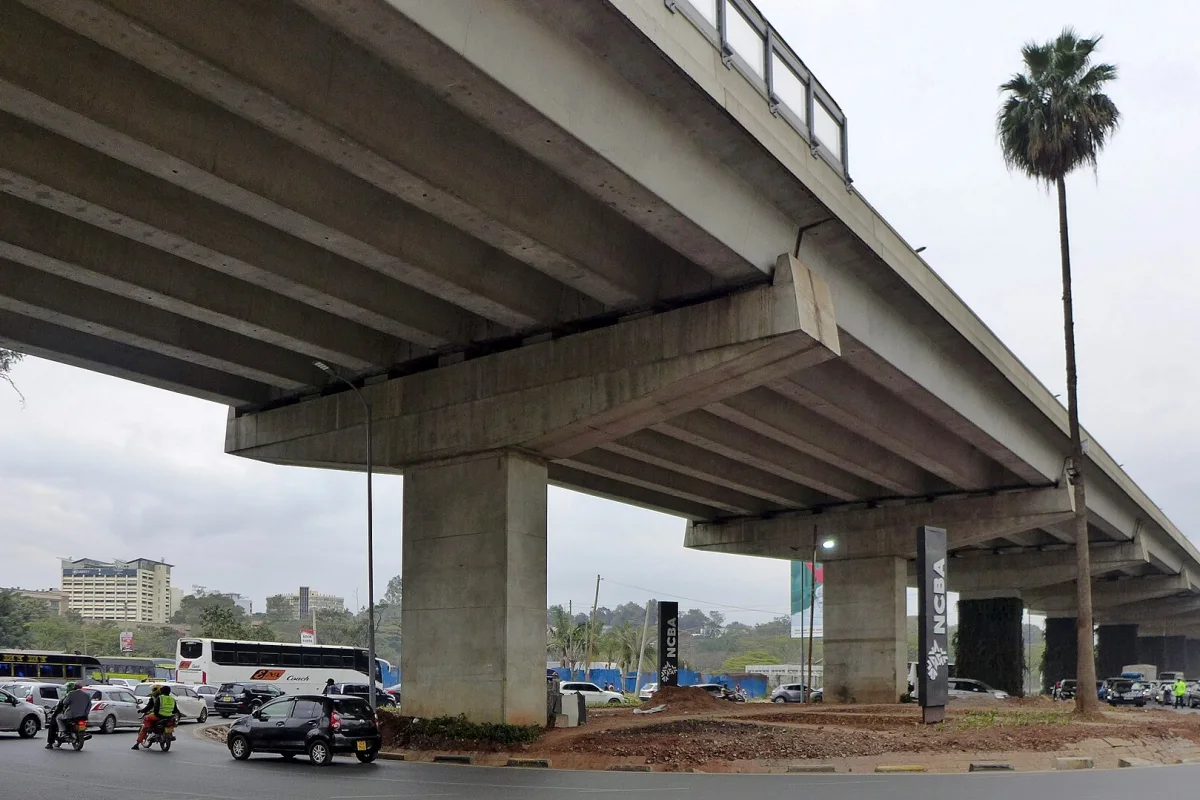
The National Assembly’s Finance and National Planning Committee has given the National Treasury until Tuesday, November 24, 2026, to explain the financial performance of the Nairobi Expressway after its operator reported a Sh5.1 billion loss.
The committee, chaired by Molo MP Kimani Kuria, raised the matter during a meeting with Treasury officials at Parliament Buildings on Monday, November 23. Treasury Principal Secretary Chris Kiptoo had appeared before the MPs to present the 2027 Budget Policy Statement and review implementation of the 2026/27 budget.
Official figures show that Moja Expressway Company Limited, which operates the toll road, reported revenue of Sh9,629,674,342 between January 1 and December 31, 2025. Its reported direct costs stood at Sh14,731,537,882, producing a net loss of Sh5,101,863,540.
The figures were contained in the fifth annual report on the state of public-private partnerships in Kenya for the 2025/26 financial year. The report says the financial statements submitted by the project companies had received audit opinions indicating that they fairly represented their financial positions.
However, the report does not provide a detailed breakdown of Moja Expressway’s Sh14.73 billion in direct costs. It therefore does not show how much was spent on routine operations, maintenance, financing charges, depreciation or repayment of money borrowed to construct the road.
MPs directed Kiptoo to submit a detailed audit trail showing how the revenue and expenditure figures were verified, what checks are in place and how the government intends to manage any resulting fiscal risk. The committee also called for an independent mechanism to verify financial information supplied by private companies running public infrastructure.
Kiptoo told the committee that any government allocation connected to the reported shortfall would have to be submitted to Parliament through a Supplementary Budget. The statement raised questions because Treasury Cabinet Secretary John Mbadi had said on November 17 that the operator’s loss did not create a direct charge on the national budget under the project’s public-private partnership structure.
The annual PPP report does not state that the government is automatically required to reimburse Moja Expressway for its annual operating loss. The precise circumstances under which taxpayers could be required to provide money are therefore among the issues the committee wants Treasury to clarify.
The government nevertheless has contingent exposure under the expressway agreement. A letter of support was issued for the project in August 2020, benefiting Moja Expressway and the Export-Import Bank of China. Treasury documents estimate that an early termination of the agreement could expose the government to a substantial payment, although such a liability would arise only if conditions specified in the contract occurred.
The PPP annual report placed the estimated termination payment at Sh87.58 billion as of June 2026. The newer 2027 Budget Policy Statement projects the Nairobi Expressway’s maximum contingent exposure at Sh72.04 billion in the 2027/28 financial year, declining to Sh63.36 billion by 2029/30. These figures represent potential contractual exposure, not money already owed or an approved payment for the 2025 loss.
Moja Expressway operates the 27.1-kilometre road connecting Mlolongo and James Gichuru Road through the Mombasa Road, Uhuru Highway and Waiyaki Way corridor. The project was developed under a 30-year design, finance, build, operate, maintain and transfer agreement with the Kenya National Highways Authority.
The project reached commercial close in October 2019 and financial close in December 2021. Operations began on May 14, 2022. Its stated project cost was about Sh86.8 billion, or approximately $667.8 million.
Traffic has continued to rise despite the reported loss. Quarterly vehicle numbers increased from about 7.21 million to 7.36 million during the latest reporting period, while March 2026 recorded the highest monthly traffic at 2,555,531 vehicles. That is an average of more than 82,000 vehicles a day for that month.
The parliamentary scrutiny comes as the government expands the use of PPP arrangements for major roads, including sections of the Rironi–Nakuru–Mau Summit corridor. MPs said weaknesses in revenue verification or risk allocation on the Nairobi Expressway could create a precedent for future projects.
Treasury’s response is expected to establish whether the Sh5.1 billion is solely a commercial loss to be absorbed by the private operator, whether any public payment has been requested, and what contractual event would justify seeking money through a Supplementary Budget.