
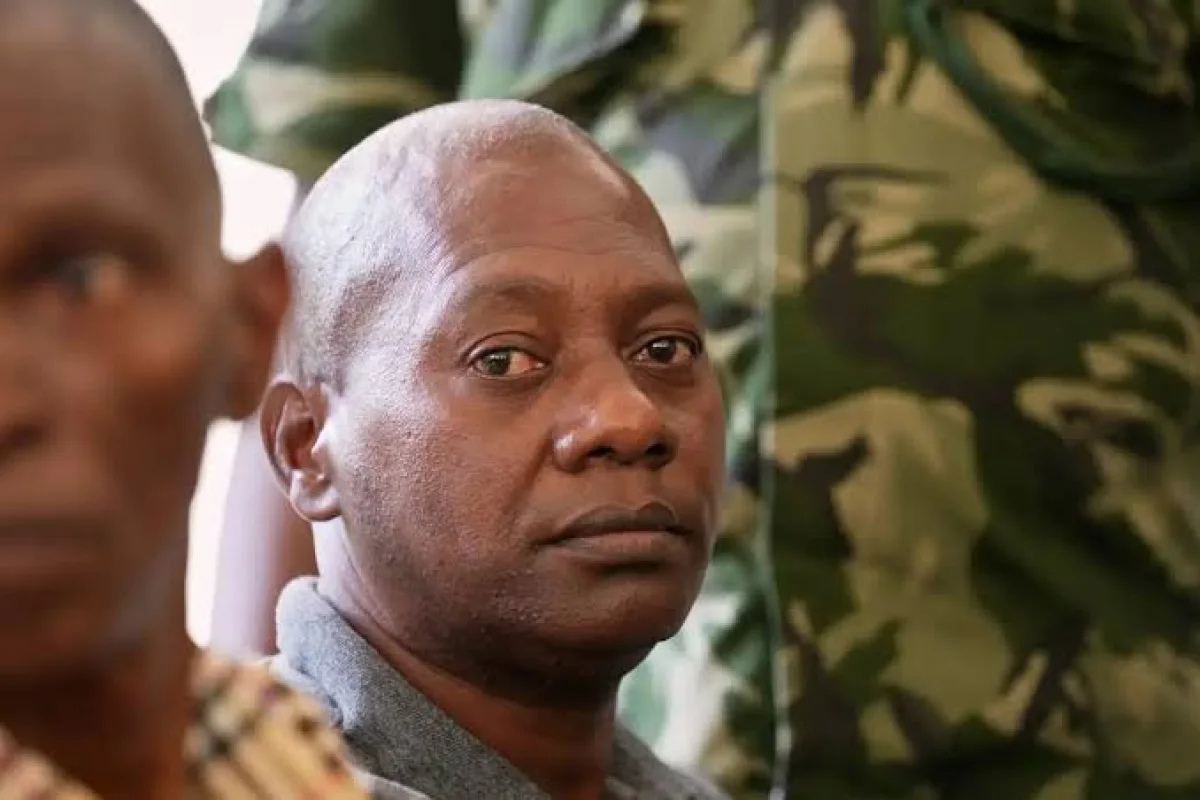
MOMBASA — Preacher Paul Nthenge Mackenzie was convicted after a children’s court found evidence linking him personally to an assault and to five acts of cruelty against children living in the Shakahola community in Kilifi County.
Principal Magistrate Nelly Chepchirchir delivered the judgment at the Tononoka Children’s Court in Mombasa on Wednesday, November 25, 2026. Eleven of Mackenzie’s co-accused were also convicted of various offences involving cruelty, assault and denial of children’s right to education.
The court nevertheless acquitted every defendant of torture. It ruled that prosecutors had not established the participation, consent or acquiescence of a public officer, an element required for the alleged conduct to constitute torture under Kenyan law. The court instead considered alternative charges of assault causing actual bodily harm, together with cruelty and education-related offences.
Mackenzie was found guilty of assault causing actual bodily harm and five counts of cruelty to children. The court found that his advice and teachings contributed to children being denied food in at least two of the charges proved against him.
Evidence presented during the trial described a system in which children were expected to begin fasting before women and men so that they would be the first to die and, according to the religious teaching given to followers, meet Jesus. Children who tried to obtain food, water or escape from the settlement were allegedly beaten, restrained or locked inside temporary structures.
One teenage survivor told the court that Mackenzie and his deputy, Smart Deri Mwakalama, beat him after he went to a neighbour looking for food. Other witnesses described children being tied by their hands and legs, prevented from eating and confined when they resisted the fasting programme.
Some survivors testified that they saw children die before their bodies were carried away for burial. The court also heard accounts that breastfeeding mothers were prevented from nursing their babies and that families were discouraged from seeking food outside the Shakahola settlement.
Prosecutors called 76 witnesses and produced 112 exhibits during a trial lasting more than a year. The witnesses included 13 children, adult survivors, former members of Good News International, relatives, police officers, children’s officers and forensic specialists.
The evidence included medical and post-mortem findings, photographs, videos, laboratory reports and information extracted from Mackenzie’s mobile phones. Investigators also described the rescue of 27 children from the forest. Clinical psychologists told the court that survivors suffered continuing trauma, including nightmares, grief, withdrawal and fear.
The magistrate stressed, however, that the scale and public notoriety of the Shakahola tragedy could not replace proof against each defendant. Being a member of Mackenzie’s community, guarding the settlement or digging graves was not, by itself, enough to establish criminal responsibility for harm suffered by a particular child.
The court also distinguished Mackenzie’s influence as a preacher from the legal duties of parents. It found that parents who took their children to Shakahola retained the responsibility to provide food, protection, healthcare and education. Mackenzie was therefore not automatically liable for every offence committed against followers’ children.
This distinction led to his acquittal on allegations that he personally denied six children their right to education. Although witnesses said Mackenzie and other preachers taught that formal schooling was contrary to God’s plan, the court found insufficient evidence that he directly instructed the parents of those particular children to withdraw them from school.
The magistrate rejected arguments that religious belief or parental discipline could excuse proven violence and deprivation. Constitutional freedom of religion protects belief and peaceful worship, but it does not permit conduct that harms children or removes protections guaranteed under Kenyan law.
Mwakalama and Stephen Sanga Muye were convicted of assault and cruelty. Evans Kolombe Sirya and Titus Munyao Musyoka were found guilty of cruelty. Gilbert Kea Katana, Peris Mupa, Catherine Wanjiru Henry and Agnes Shihale Jumba were convicted of cruelty and education-related offences, while Alice Kawira, Felix Katana and Frida Katana were convicted of violating children’s right to education.
Twenty-four defendants were acquitted after the court found that prosecutors had not connected them individually to the alleged offences. The case originally involved 39 accused persons. Proceedings against Edison Safari Nyambu and Kelvin Sudi Asena ended following their deaths, while charges against Enos Amanya Ngala were withdrawn under a plea agreement, leaving 36 defendants for determination.
The convictions add to Mackenzie’s existing 200-year prison sentence imposed by the High Court in Mombasa on November 6, 2026, for the murder of 190 children and one adult in Shakahola. That sentence comprised 100 years for deaths caused through starvation and another 100 years for eight direct homicides.
The 12 people convicted in the children’s case are due to present mitigation on December 17, 2026. The court has ordered the preparation of pre-sentence reports, while the parties have the right to challenge the judgment before the High Court.